 |
Nancy Hennessy, M.ED - Moderator
|
 | Kenneth Pugh, Ph.D.
The literate brain: An update on neuroimaging studies of language development, reading, and reading disability.
We will review the latest research from our lab and others on the neurocognitive bases of typical and atypical language and reading development. New discoveries on how genetic, neurobiological, and environment factors impact early language development and later reading outcomes will be discussed in this context. We will also review our latest research on the brain-basis of treatment and remediation of language and reading difficulties, which includes ongoing collaborations with AIM Academy. |
 | Laurie Cutting, Ph.D.
Neural circuitry of reading: What have we learned, and where do we go from here?
This presentation will review past and present findings related to the neural circuitry of reading, both at the word- and discourse-level. The implications of understanding the neurobiological correlates of reading and dyslexia for future translational and practical applications in the classroom will be discussed. |
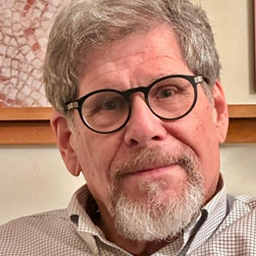 | Mark Seidenberg, Ph.D.
The roles of knowing how and knowing that in reading instruction and intervention
Philosophers distinguish between knowing how and knowing that. For example, all of us know how to use language, but it takes linguistic training to know that language consists of abstract levels of structure such as syntax, semantics, and thematic roles. Instructional practices and assumptions need to be assessed with respect to their impact on teaching children how to read and write, which is the primary goal. Teaching children that reading and language have various properties is justified only if it advances this primary goal. |
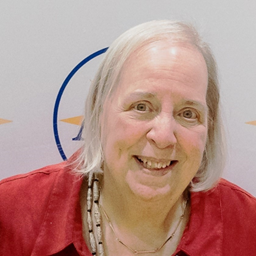 | Hollis Scarborough, Ph.D.
When Matters … Taking a Developmental Perspective on Oral Language, Reading, and Reading Disability
Taking a developmental perspective has been important for examining the relation of oral language to reading and reading difficulties, and this viewpoint is embodied in the Reading Rope. Examples will be presented, and the potential perils of not taking “when” into account will be discussed. |
 | G. Reid Lyon, Ph.D. - Hollis Scarborough Award Recipient
Advancing Literacy Through Science: A Tribute to the NICHD/NIH Research Teams
The NICHD Reading Research Program was designed to address four overarching questions: How do children learn to read? Why do some children (and adults) have difficulty learning to read? How can we prevent reading failure? How can we remediate reading failure? This presentation honors the NICHD/NIH Reading Research teams, whose collaborative multidisciplinary scientific efforts advanced the science of reading and improved the lives of children worldwide. |
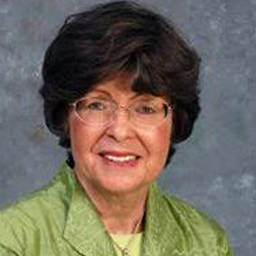 | Linnea Ehri, Ph.D
Orthographic Mapping: Using the Writing System to Bond Spellings to Pronunciations and Meanings in Memory for Sight Word Learning
Sight word learning involves storing the spellings of individual words connected to their pronunciations, meanings, and syntactic functions in memory so that when the words are seen, this information is activated automatically and enables readers to comprehend text without having to stop and figure out individual words. All words become sight words once readers have practiced reading them. How is it possible for readers to remember so many words? |
 | Donald L. Compton, Ph.D.
The Challenge of Reading Difficult Words for Developing Readers: Moving from Experimental Studies to an Online Resource for Teachers, Researchers, and Stakeholders
English spelling is described as quasi-regular, meaning a system in which the relationship between input (i.e., orthography) and output (i.e., phonology) is systematic, but with many inconsistencies (often referred to as exceptions). Quasi-regular orthographies, such as English, place added demands on word reading development in children. As a result, English is particularly difficult for developing readers, which requires them to develop a diverse set of decoding strategies. There is a growing realization that the skills early readers engage in for reading one syllable words are often not sufficient for words that are polysyllabic/polymorphemic. This presentation will present results from FCRR’s experimental work examining mechanisms undergirding complex word reading in developing readers and the introduction to the developmental English Lexicon Project (d-ELP), a publicly available database that provides searchable access to the word difficulty ratings and associated word-level statistics for the 10,000 most frequent words. |
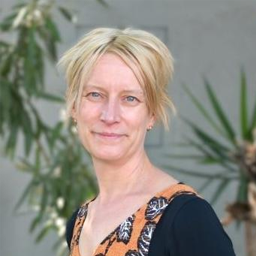 | Kate Cain, D.Phil.
Reading Comprehension: What is it and what can we do to foster success?
This session explores what reading comprehension is, why it breaks down, and what educators can do about it. Dr. Kate Cain will examine the skills, knowledge, and processes required to construct a mental model during reading — including language comprehension, inference, and monitoring — and how these can vary across age groups and subject areas. She will also highlight profiles of students who struggle with comprehension despite strong word reading abilities. Drawing from research and intervention studies, Dr. Cain will share practical insights for classroom instruction, emphasizing the importance of early comprehension support, integrating decoding and understanding, and building teacher knowledge across subjects.
|
 | Panel: The Literate Brain
● Dr. Devin Kearns, North Carolina State University
● Aviva Coyne-Green, AIM Academy
● Dr. Ramona Pittman, Texas A&M University |
 | Panel: Sight Word Reading: Connecting Spellings to Meanings in Memory
● Dr. Katie Pace Miles, City University New York
● Dr. Renata Archie, Mount Saint Joseph University and NY Public Schools
● Dr. Pam Kastner, Literacy Consultant
|
 | Reflections of the Day
● Dr. Elsa Cárdenas-Hagan, Valley Speech, Language and Learning Center
● MeQuel Bolden, Maryland State Department of Education
● Dr. Brandy Gatlin-Nash, University of California, Irvine
● Nancy Hennessy, Author, The Reading Comprehension Blueprint
● Kristen Wynn, AIM Institute
|
